
 9640056766
 Manisha Diabetes and Endocrine Centre, Danavayapeta, Rajahmundry, Andhra Pradesh - 533101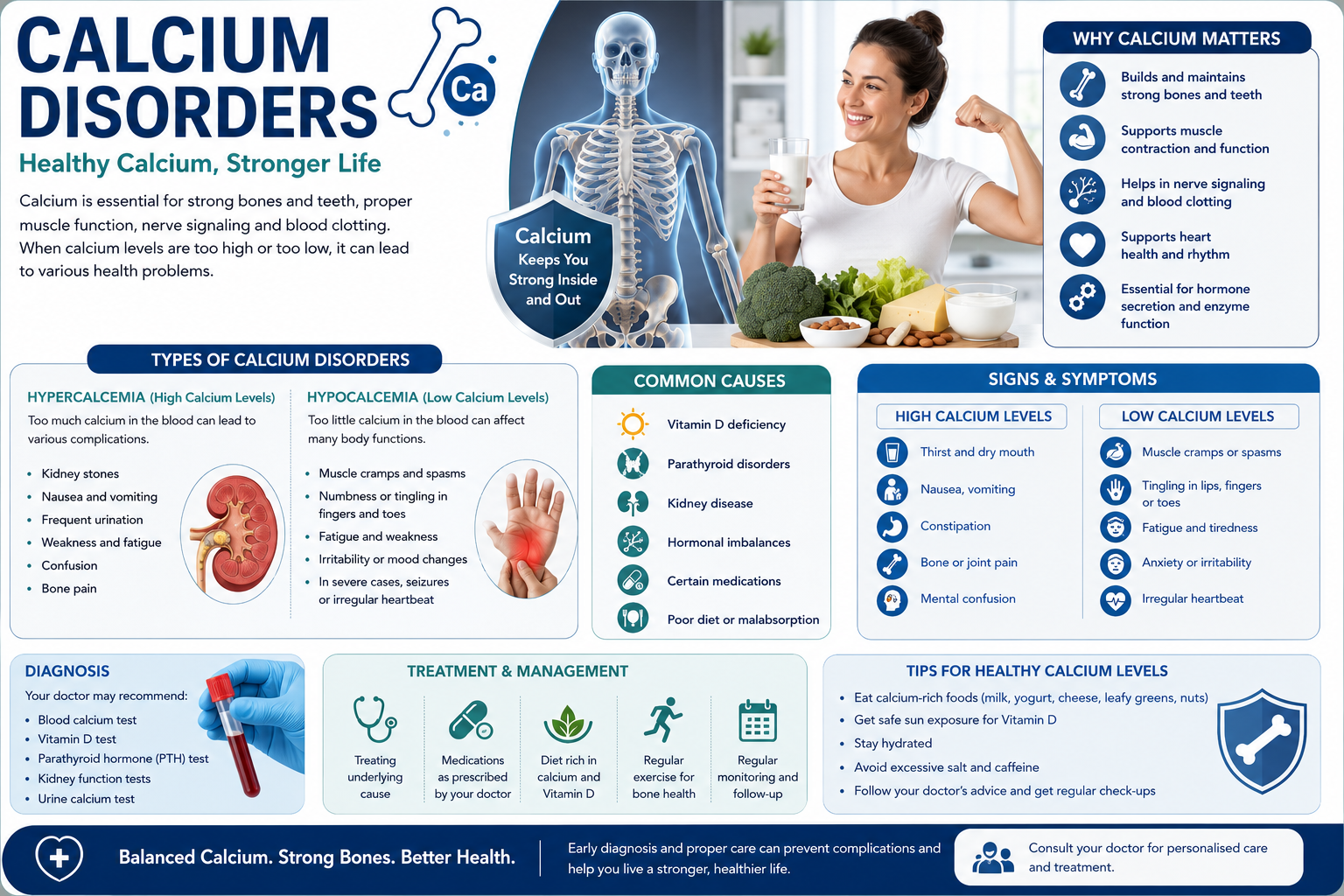
Overview
Calcium disorders involve abnormally high (hypercalcemia) or low (hypocalcemia) blood calcium levels, often linked to parathyroid, kidney or bone health. Identifying the underlying cause allows calcium levels to be corrected safely and effectively.
Symptoms
- High calcium: fatigue, constipation, kidney stones, excessive thirst
- Low calcium: muscle cramps, tingling around the mouth and fingers, muscle spasms
Causes & Risk Factors
Calcium disorders can arise from parathyroid gland disorders, vitamin D imbalance, kidney disease, or certain medications.
Diagnosis
Diagnosis involves serum calcium, parathyroid hormone (PTH), vitamin D, and kidney function tests, to build a complete picture of what is driving the calcium imbalance.
Treatment Options
Treatment is tailored to the underlying cause, and may include:
- Treating the underlying cause
- Adjusting calcium and vitamin D intake
- Ongoing monitoring of calcium levels

Benefits Of Treatment At Our Clinic
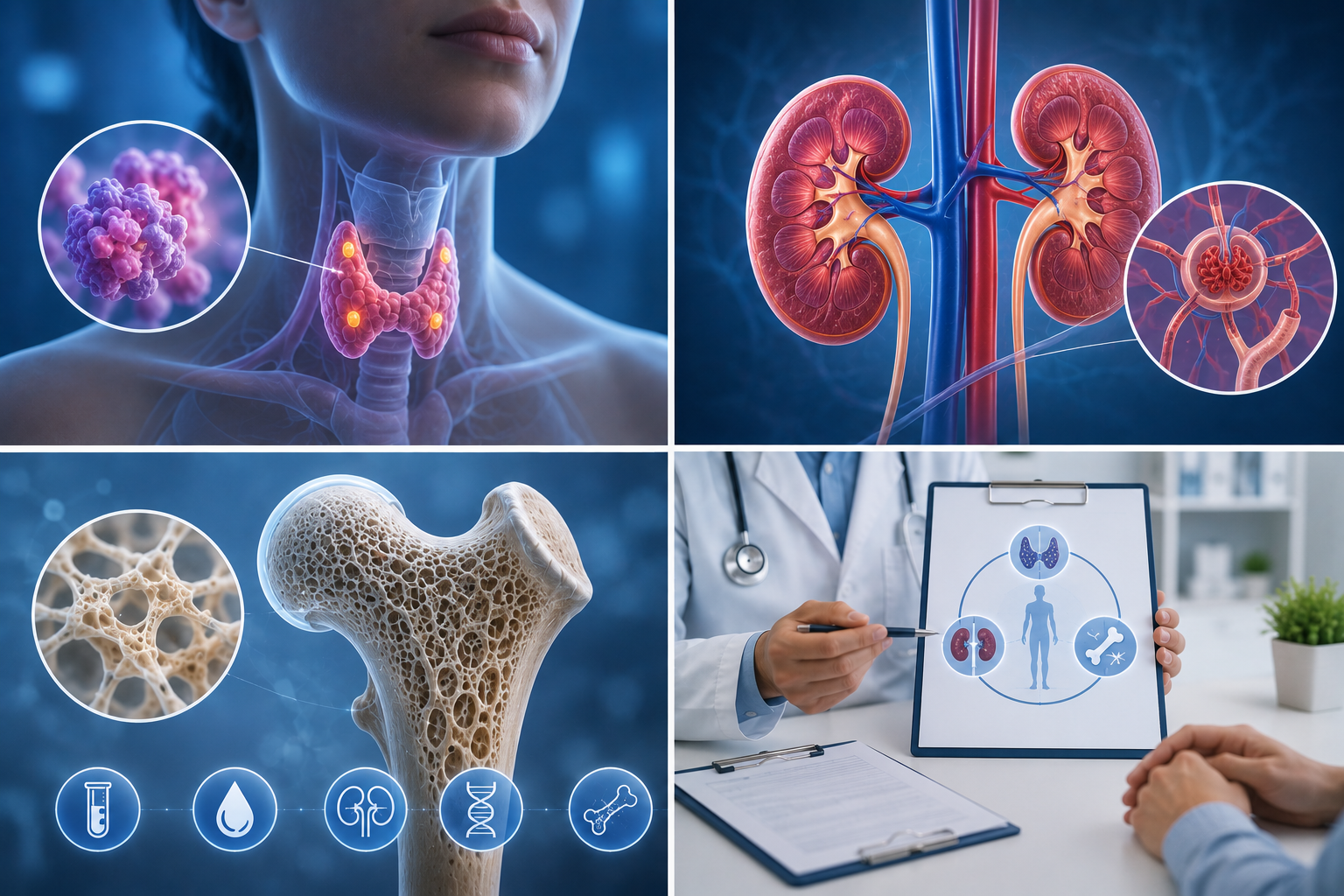
- An integrated evaluation of parathyroid, kidney and bone health together
- A complete approach rather than treating a calcium number in isolation


 Emergency Contact: 9640056766